

Resources

Connecting the Future: The Evolution and Breakthroughs of Communication Antennas in the AI Era
As Generative AI and edge computing advance rapidly, the global technology landscape is entering a new phase of seamless integration between Internet of Things (IoT) devices and intelligent systems. Serving as the essential physical touchpoint of wireless networks, high-performance communication antennas are far more t
Read More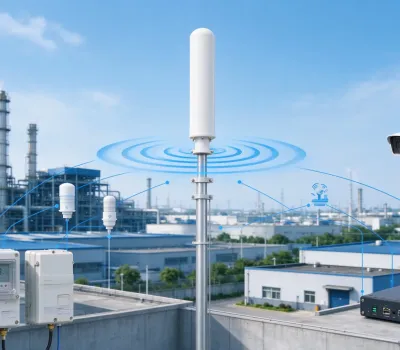
Fiberglass Omni Antenna: Key Advantages, Application Scenarios and Selection Guide for Communication Infrastructure
Modern communication infrastructure requires stable, wide-range, and weather-resistant signal coverage to support 4G/5G cellular networks, industrial IoT, smart cities, and rural broadband systems. As a core wireless device, the fiberglass omni antenna has become a preferred solution for system integrators and telecom
Read More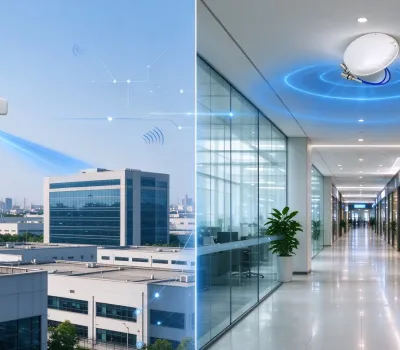
Yagi vs Omni Antenna: Key Differences, Applications and How to Choose
Q1: What are Yagi and Omni antennas, in simple terms? Omni (omnidirectional) antenna broadcasts and picks up RF signals evenly in a full 360° horizontal circle. Think of it like a ceiling lamp that shines light everywhere around it. It delivers equal signal strength to all sides. Yagi antenna is a directional antenna
Read More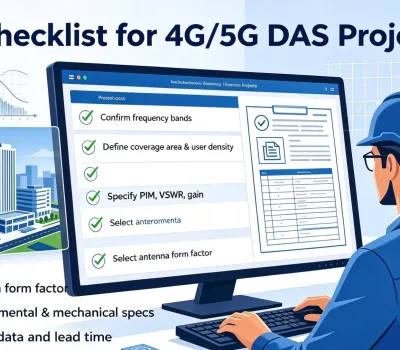
How to Choose Indoor DAS Antennas for 4G/5G Projects: A Manufacturer’s Guide
As an antenna manufacturer, we speak with system integrators, carriers, and project owners every week. One question keeps coming up: “Which indoor antenna should I use for my DAS project?” The honest answer is that it depends on your RF environment, your coverage goals, and your budget. There is no single “best” antenn
Read More
470‑510 MHz High‑Gain Fiberglass Antenna: Applications & Overview
The 470‑510 MHz UHF band delivers outstanding diffraction performance, low propagation loss and strong penetration through buildings. High‑gain omnidirectional fiberglass antennas for this frequency serve as key RF hardware for outdoor IoT and industrial wireless systems, with robust FRP housing for long‑term field ope
Read More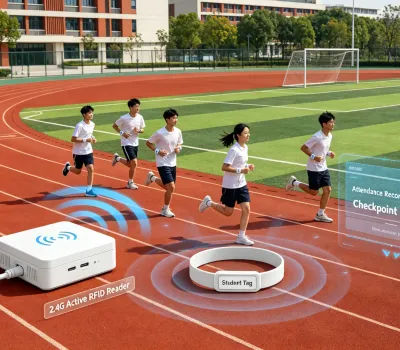
2.4G Active RFID Campus Solution for Intelligent Sports & Safety Management
Core Technology Advantage The biggest strength of 2.4G active RFID lies in long-range, non-contact automatic recognition. Different from conventional card-swiping systems requiring close contact, 2.4G active RFID tags can be detected automatically when students pass predefined zones including playground tracks, checkp
Read More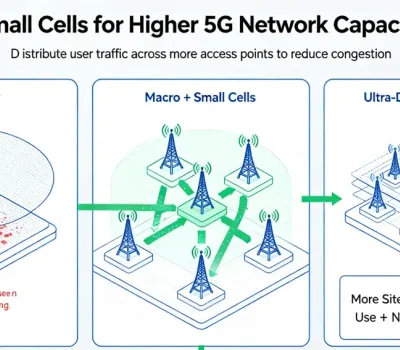
5G Macro Base Station Congestion: Key Advantages of Small Cell Deployment
The standard 5G small cell deployment model overlays multiple small cells within the signal coverage of a macro base station. Take Eastern Taipei as an example: a single macro base station can deliver full signal coverage for this district. However, dense crowds generate massive mobile data traffic, which requires high
Read More
Optimizing Airport Connectivity: The Critical Role of Indoor Distributed Antenna System (DAS)
1. Introduction: Complex Wireless Challenges in Modern Airport Terminals Modern airports are ultra-large, complex comprehensive transportation hubs with ultra-high passenger flow density and complex building structures. Featuring 10–20 meter high open halls, closed corridors, and large-area metal glass curtain walls,
Read More
The Role of Small Cell Antennas in Next-Generation Connectivity and Smart Environments
As global mobile data traffic continues to surge, telecom operators and private enterprises face a critical challenge: providing high-capacity, ultra-reliable wirelesscoverage in densely populated and high-demand environments. While traditional macro cell towers form the backbone of cellular networks, they often strugg
Read More